

4 cast iron materials used in mechanical cast iron casting
Besides ferrous metals such as iron, steel, and stainless steel, cast iron is also a popular material in the mechanical casting industry. Mechanical cast iron is very developed, especially in seaport and industrial cities such as Hai Phong. Cast iron produces details and machinery equipment that directly serve factories, workshops, docks, etc.
In the article below, Lostwaxcasting CDL will introduce to readers the 4 types of cast iron materials that are most used in the mechanical cast iron casting industry. Each type of cast iron has its own characteristics and applications.
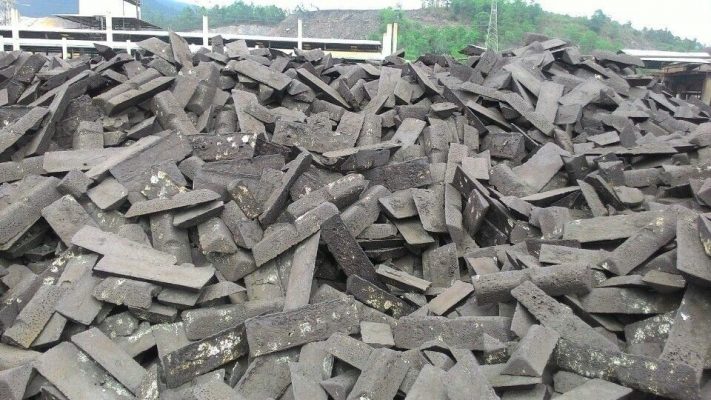
1. General introduction to cast iron
1.1. Khái niệm về gang đúc
Cast iron (English name is cast iron) is an alloy of iron with a carbon content greater than 2%, along with a small amount of other elements such as S, P, Si, Mn …
Cast iron appeared in the 5th century BC, used to manufacture weapons as well as agricultural tools. Since then, cast iron has become an increasingly popular black metal. There are several different types of cast iron, each with different properties, creating the “uniqueness” of that type of cast iron.
1.2. Properties of cast iron
Cast iron has a melting temperature between 1150 and 1200°C. Cast iron is considered to have good compression resistance and high wear resistance.
Except for ductile cast iron, other types of cast iron are generally brittle metals, not suitable for brittle machining. However, cast iron is very easy to smelt, has higher casting properties than steel. It is the carbon content and silicon component that give cast iron excellent casting ability.
Cast iron is a material commonly used in mechanical casting. Especially for making complex shaped machine parts such as: flywheels (pulleys), belts, gears, rolling shafts, gate valves, etc.
2. Four types of cast iron used in mechanical cast iron casting
By using different machining and heat treatment techniques, we have 4 common types of cast iron: gray cast iron, white cast iron, nodular cast iron, ductile cast iron.
Below is a table of the main elemental compositions in the 4 types of cast iron:
| Loại gang | Cacbon (%) | Silic (%) | Mangan (%) | Lưu huỳnh (%) | Photpho (%) |
| Gang xám | 2.5 – 4.0 | 1.0 – 3.0 | 0.2 – 1.0 | 0.02 – 0.25 | 0.02 – 1.0 |
| Gang trắng | 1.8 – 3.6 | 0.5 – 1.9 | 0.25 – 0.8 | 0.06 – 0.2 | 0.06 – 0.2 |
| Gang cầu | 3.0 – 4.0 | 1.8 – 2.8 | 0.1 – 1.0 | 0.01 – 0.03 | 0.01 – 0.1 |
| Gang dẻo | 2.0 – 2.9 | 0.9 – 1.9 | 0.15 – 1.2 | 0.02 – 0.2 | 0.02 – 0.2 |
The alloy composition of cast iron affects the crack path when the cast iron breaks. For example, white cast iron will have straight cracks. Grey cast iron has graphite flakes that deflect the cracks as they pass through, creating countless new cracks.
=> Let’s continue to learn more about each type of cast iron.
2.1. Gang xám (grey iron)
This is the most popular type of cast iron today, widely used in the field of mechanical casting.
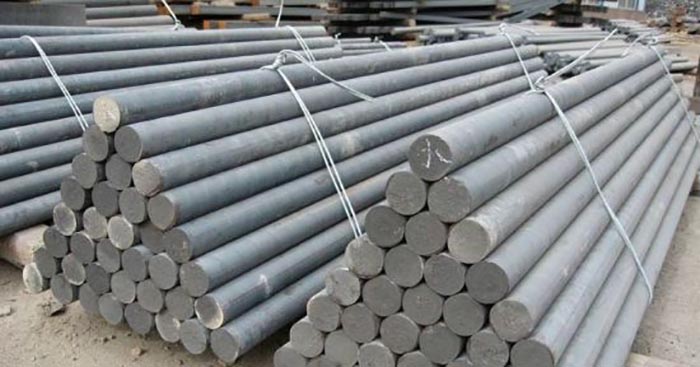
Common grey cast iron grades
According to TCVN 1659-75, common grey cast iron grades are: GX00; GX12-28; GX15-32; GX18-38; GX21-40; GX24-44,…
According to Japanese JIS standards, there are cast iron grades: FC100, FC150, FC200, FC250, FC300,…
Characteristics
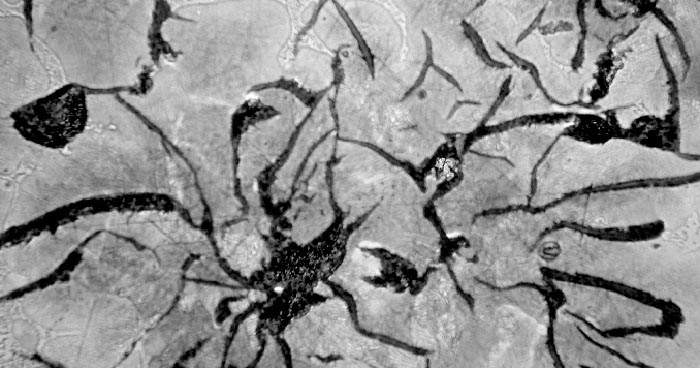
Gray cast iron has a carbon crystal structure of plate-shaped graphite, with a matrix of ferrite, pearlite, or pearlite. Gray cast iron is characterized by the flake shape of the graphite molecules. Fractured gray cast iron cracks along the graphite flakes. The cracks open to reveal gray graphite beneath the surface. This is also the origin of the name gray cast iron.
Practical applications
Due to its good friction resistance, cast iron is suitable for parts that need lubrication containing oil. Typically used to manufacture ball bearings, sliding bearings, gears, etc.
Today, gray cast iron is used in the machinery manufacturing industry, mechanical casting of large machines with high complexity, parts that need to withstand good compressive force but do not need to withstand large bending forces. For example, machine tool machines (lathes, milling machines, planers, etc.), internal combustion engine bodies, etc.
2.2. White iron
White cast iron is not as common as gray cast iron. Its name comes from the pale white color of cementite (a result of iron compounds) beneath the cast iron surface. When white cast iron is cut, the fracture surface is filled with many small white cracks, without the graphite found in gray cast iron.
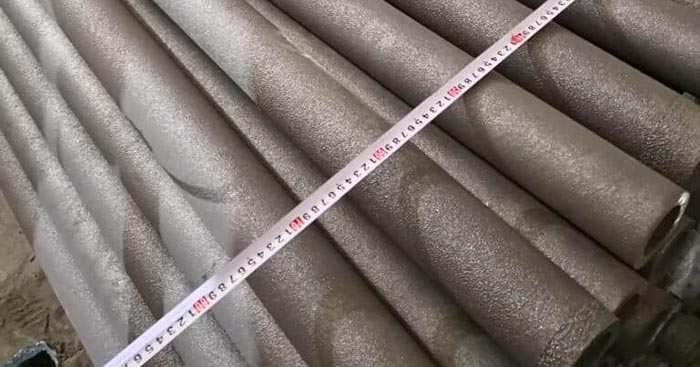
White cast iron is used to manufacture machine parts and mechanical parts with high abrasion resistance such as grinding balls and rolling shafts. In addition, white cast iron is also used as nozzle linings, pump housings, mixing blades, stamping dies, mill linings, etc.
2.4. Ductile iron/nodular iron
Common ductile iron grades
According to Vietnamese standard TCVN 1659-75, cast iron symbols start with 2 letters GC, for example GC45-15.
According to Japanese standard JIS, there are marks such as: FCD370, FCD400, FCD450, FCD500, FCD600,…
Characteristics
Nodular cast iron has the same microstructure as gray cast iron, but the graphite is in a spherical form. Magnesium is added to the alloy, causing the graphite to form spheres instead of gray iron flakes.
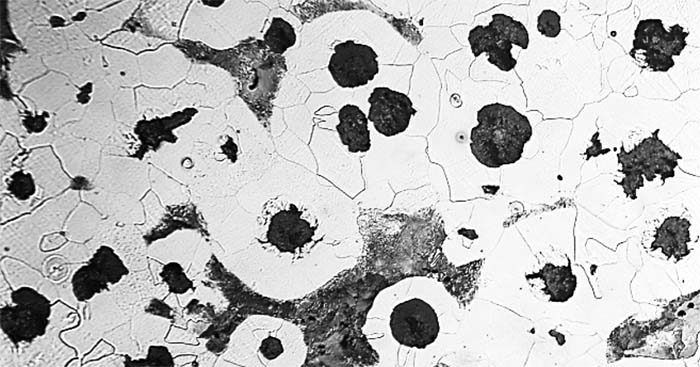
Compounds such as magnesium inhibit the growth rate of graphite, keeping the metal soft and malleable. In addition, ductile iron has high strength due to the graphite in the form of spheres. This is also the reason why ductile iron has much higher tensile strength and ductility than gray cast iron.
Ductile iron has both the properties of steel and the properties of cast iron. Hardness and durability can be increased if heat treated. In some cases, people can use ductile iron instead of steel to save costs.
Practical application
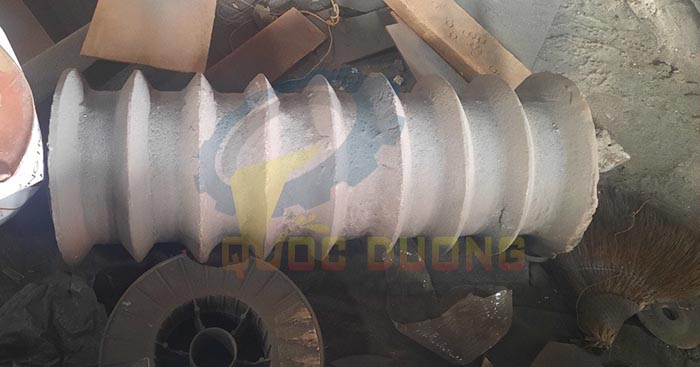
As mentioned, ductile iron is increasingly used to replace steel. Especially in cases where it is necessary to cast parts with complex shapes but need to minimize raw material costs. The most typical is the casting of mechanical parts, machine parts that bear high loads, tensile, and impact such as crankshafts, rolling shafts, rollers, gears, etc.
2.4. Malleable iron
Ductile iron is usually produced by heat treatment of white cast iron. Prolonged heating and cooling causes the carbon molecules to decompose, releasing free graphite into the iron. This results in a malleable cast iron with a microcrystalline structure.
When white cast iron is annealed, the cementite of the white cast iron differentiates into graphite. After slow cooling, ductile cast iron (or wrought iron) is produced.
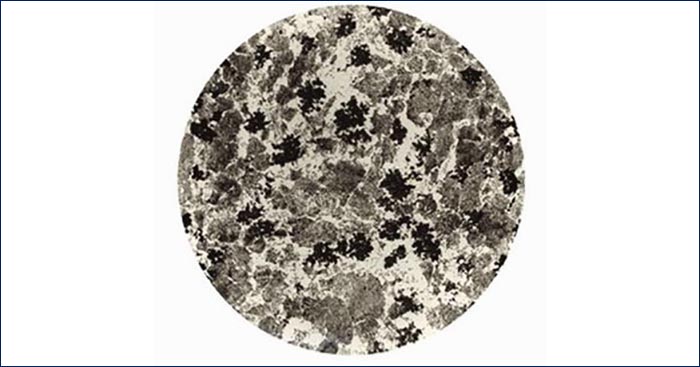
Microstructure of ductile iron
Common ductile iron grades
According to Vietnamese standard TCVN 1659-75, the symbol for ductile iron starts with the 2 letters GZ. For example, GZ33-8.
According to Japanese standard JIS, there are grades: FCMB270, FCMB340, FCMB360, …
Characteristics, properties
The amount of graphite in ductile iron is less than other types of cast iron. Therefore, it is easy to bend, the toughness, and tensile strength of ductile iron are relatively high (lower than ductile iron but higher than gray cast iron).
Ductile iron has a low melting point, high fluidity, good casting properties, and is easy to process.
Practical applications
Ductile iron is less commonly used than gray cast iron. The reason is that the manufacturing technology is complicated, making ductile iron much more expensive than gray cast iron. Ductile iron is only used when manufacturing parts that are resistant to impact – tensile, have complex shapes, and are thin-walled (no more than 50mm). Typically, details in agricultural machinery, tractors, weaving machines, etc.
Conclusion: Hopefully the above article has helped readers gain more useful knowledge about mechanical cast iron types.