

Casting Stainless Steel using Lost Wax Casting Technology
Lost wax casting technology, also known by various names such as thin-shell mold casting, investment casting, thin-shell casting, wax casting, or wax pattern casting, is an advanced process in the field of metal casting. Below is the casting process of this technology:
Investment Casting Process
-
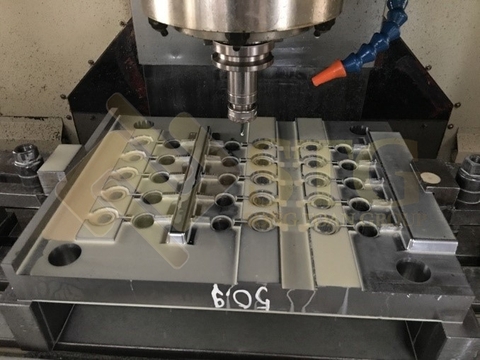
Design & Manufacturing of Investment Casting Molds (Wax Models)
- Design and manufacture investment casting molds (wax patterns) on precision CNC machines to ensure accurate parts according to the investment casting process. The mold cavity is then polished and surface treated as required.
-
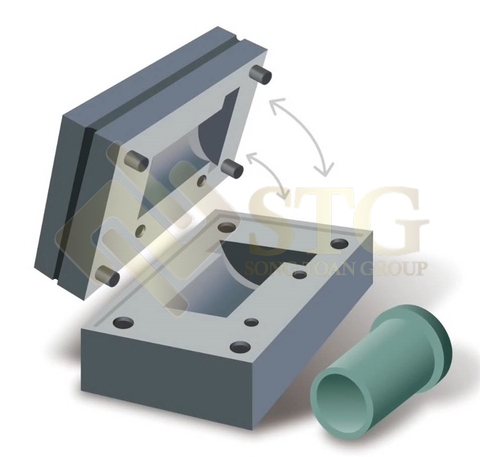
Investment Casting (Wax Casting)
- The wax pattern is created through the injection molding method, forcing molten wax into a mold. After solidifying, the wax pattern is removed from the mold.
-
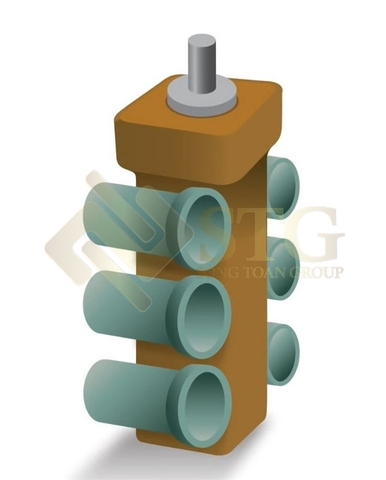
Assemble the melts into a column (Wax casting)
- The wax patterns are assembled into a tree so that multiple parts can be cast in one pour. The tree is then dried at room temperature.
-
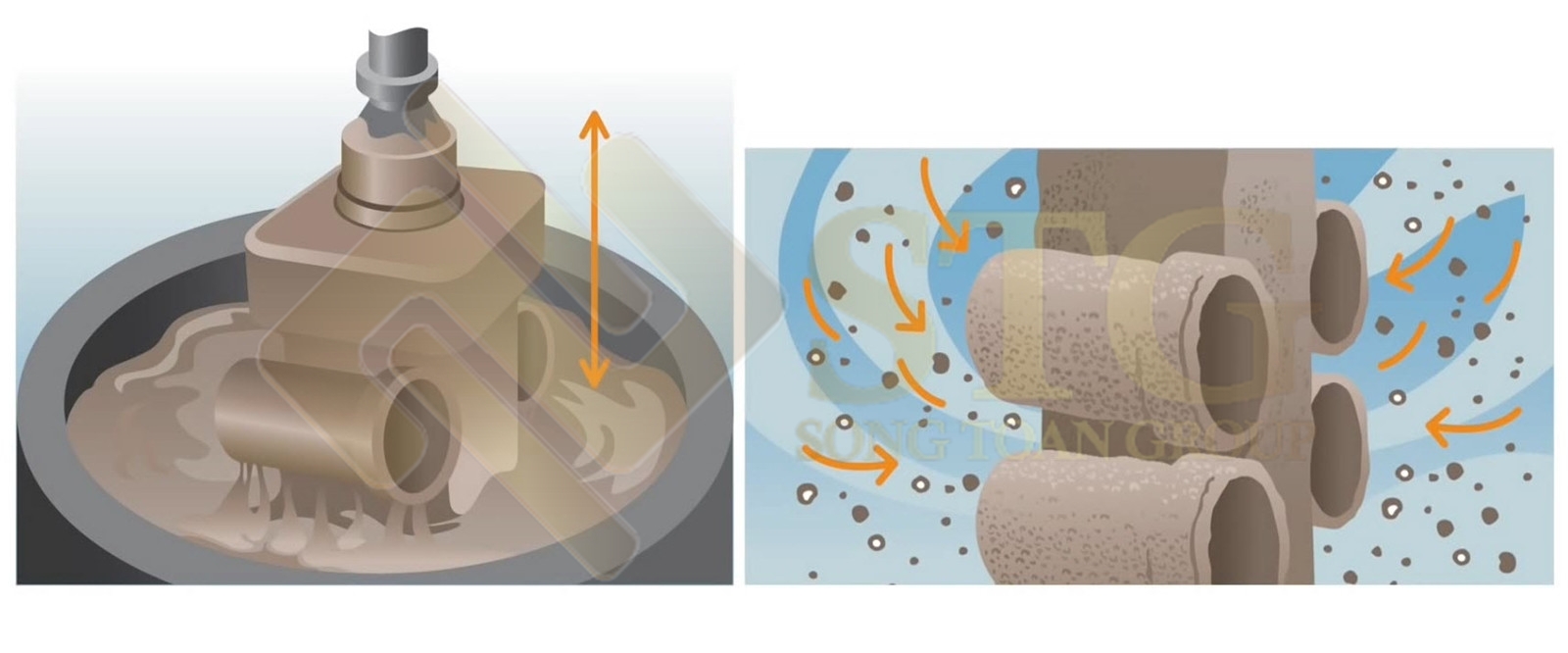
Create ceramic shell
- The wax sample is dipped into a bath of soy sauce and then sand is sprinkled over it to form the first shell. This process is repeated to achieve the desired thickness and hardness.
-
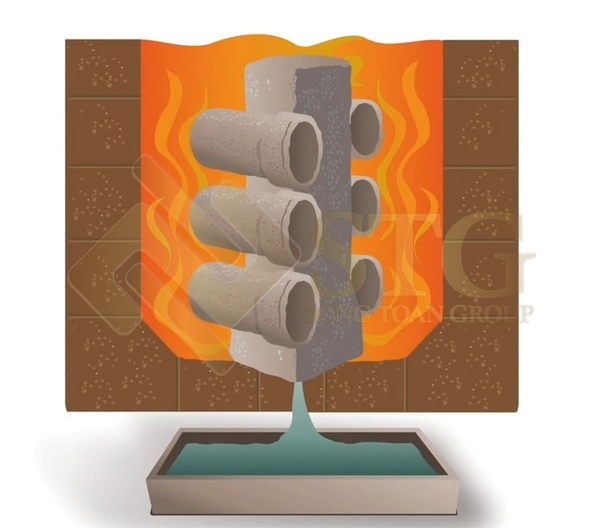
Wax release and shell firing
- After drying, the shell is put into a wax removal machine to remove the wax. Then, the ceramic shell will be fired in a kiln at high temperature to achieve durability and stability.
-
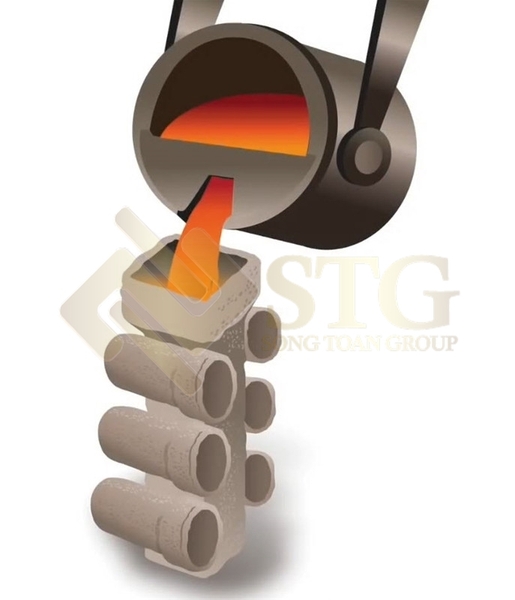
Casting (Pouring molten metal into a shell)
- Molten metal is poured into the thin shell. The entire stainless steel casting and the shell will be cooled naturally to solidify the casting and stabilize the size.
-
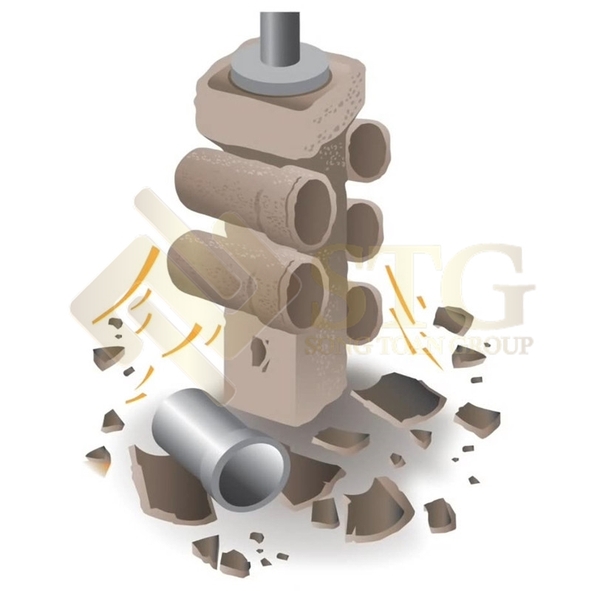
Break the shell and get the product
- The ceramic shell will be broken, and the casting removed. This process can be done manually or through a vibrating machine.
-
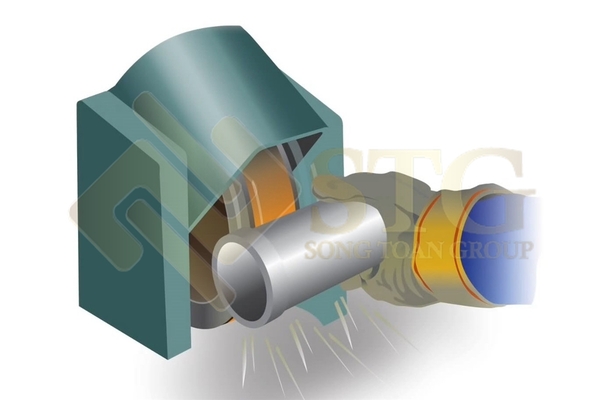
Cut the channel and grind the spout
- The stainless steel casting is cut to separate each casting, then the spout and cuts are polished to create the finished casting.
-
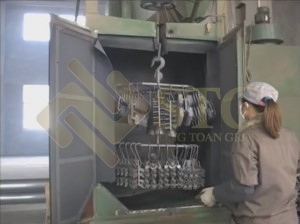
Sandblasting or shot blasting
- Tùy thuộc vào yêu cầu về chất lượng sản phẩm, vật đúc có thể trải qua xử lý bề mặt như phun cát, phun bi, hoặc đánh bóng để nâng cao chất lượng bề mặt.
-
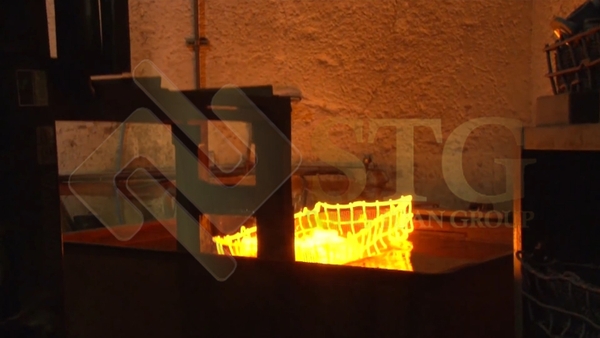
Annealing
- For some metal casting products, to achieve the required mechanical properties, the product can be heat treated by methods such as quenching, tempering & tempering, nitriding, carburizing, or according to customer requirements.
Product quality control
Product quality inspection is an important step to ensure that the product meets quality standards before it is delivered to the customer. Our inspection process includes:
-
Check the size:
- Engineers check product dimensions to ensure they meet engineering and design requirements.
-
Surface Quality Testing:
- The surface quality of the product is inspected to ensure smoothness and beauty, and to determine if there are any unevenness or defects.
-
Disability Check:
- Inspect products to detect and evaluate defects that may affect quality and performance.
-
X-Ray Test (if required):
- X-Ray scanning can be performed to check for pitting and detect defects not visible to the naked eye.
-
Leak Test (if required):
- Check to ensure there are no leaks in the product, especially important for products that need to hold pressure.
All these quality checks ensure that the castings are of good quality and meet the set standards, before they are delivered to the customer.


Anti-Rust Oil Coating or Surface Treatment:
- For stainless steel castings (stainless steel, SUS 304, SUS 316), surface treatment is usually not required.
- For cast iron and ordinary steel products, to protect against rust, we can apply anti-rust oil coating or other surface protection. This helps increase the life and ensure the durability of the product when exposed to harsh environments.